
SOC Containers
Shipper-Owned Containers for International Freight Shipments
Pro Box Inc. supplies cargo-worthy Shipper-Owned Containers (SOCs), new one-trip units, and specialty containers for international freight, project cargo, commercial storage, government, military, and industrial applications. We serve freight forwarders, exporters, EPC and project teams, contractors, government agencies, military and defense operations, schools, facility managers, and other commercial organizations.
The basics
What Are SOC Containers?
An SOC is a shipper-owned container. You buy the box. It moves on the vessel as your equipment, keeping equipment control with the shipper.
A COC — carrier-owned container — belongs to the shipping line. You use it under their rules, their free time and their return requirements.
The cargo is the same. What changes is who controls the equipment, and what happens when the schedule slips.
SOC vs. COC
Same cargo. Different rules.
| SOC | COC | |
|---|---|---|
| Who owns the box | You do | The carrier |
| Carrier demurrage | Avoided — it's your box | Clock runs on the line's terms |
| Loading and stuffing time | Set by your operation | Set by free-time windows |
| Remote or one-way destinations | No empty return obligation to the line | Return requirements apply |
| Equipment at destination | Yours to sell, keep or use | Goes back to the carrier |
| Condition control | Inspected and documented before it ships | Whatever is released at the depot |
Why choose an SOC
Own the container. Skip carrier demurrage.
Control your timeline—with SOC buyback options on qualifying projects.
Control over the equipment
You know which box you're getting, what condition it's in and when it shows up. No release lottery at the depot.
No carrier demurrage
Because an SOC belongs to you, the carrier owns none of the equipment. That means no carrier demurrage on the container itself. The terminal still owns the land under the box. If your SOC sits at the port past the terminal's allowed free time because of customs or pickup delays, the terminal can bill port storage — sometimes called "terminal detention" — even though it is a land charge separate from the line's equipment fees.
Plan ahead. Then work on your timeline.
Cargo-worthy SOCs generally need about 5–7 days for inspection and certification, so a little advance planning gives you more flexibility once the container is yours.
Difficult lanes and destinations
Some destinations are hard to get carrier equipment into — or out of. SOCs are a common answer.
Fees explained
Demurrage vs. detention, and what SOCs avoid
Demurrage
A charge when carrier-owned equipment is taken out of the port for unloading and remains out past the deadline for returning it empty to the carrier's depot.
Detention
A charge when a full container stays inside the marine terminal, container yard or rail ramp past the carrier's allowed free days. It is a space-and-time fee tied to the port.
Because an SOC belongs to you, the carrier owns none of the equipment. That means no carrier demurrage on the container itself.
The terminal still owns the land under the box. If your SOC sits at the port past the terminal's allowed free time because of customs or pickup delays, the terminal can bill port storage — sometimes called "terminal detention" — even though it is a land charge separate from the line's equipment fees.
International freight
Built for International Freight
For an SOC to be accepted for international shipment, the container must meet carrier requirements and the documentation must be accurate and properly aligned with the booking.
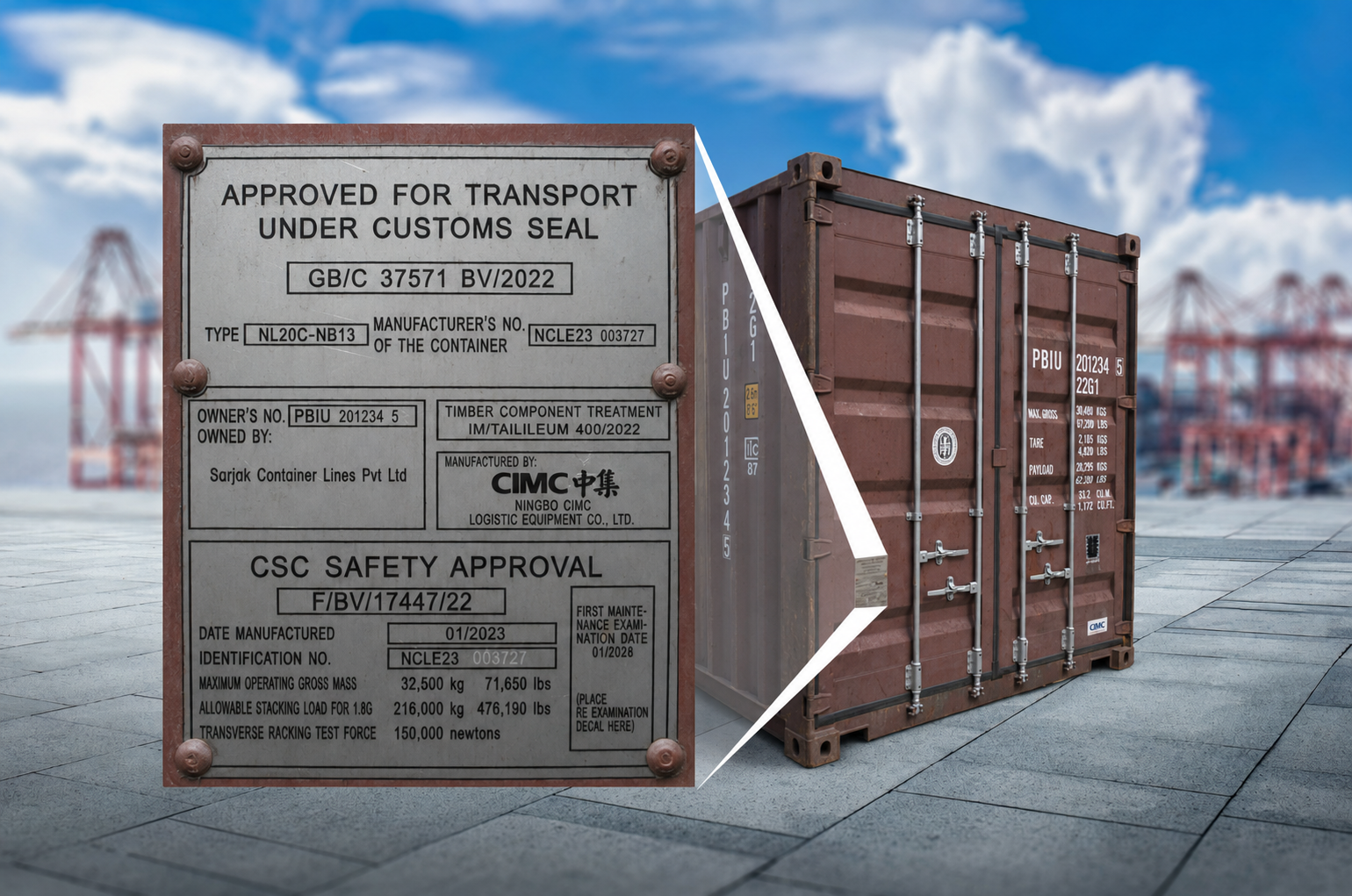
That means cargo-worthy condition, a valid CSC plate, and container data that lines up with the booking and the LOI: prefix, container number, CSC approval code, country of origin, year of manufacture, tare weight, gross weight, and stacking and racking weights.
Requirements vary by carrier, trade lane and destination. We work to the requirements of your specific booking rather than a generic checklist.
Condition
Cargo-Worthy and New One-Trip Options
Choose cargo-worthy units for eligible international freight requirements or new one-trip containers when project, cargo, or customer specifications call for newer equipment.
Cargo-worthy is a functional grade based on suitability for international ocean transport. These containers have been in service and typically show visible wear, while inspection confirms they are structurally sound and ready for the voyage ahead. Used storage containers fall under a separate grade intended for stationary storage applications.
We verify condition, arrange the cargo-worthy survey, issue the cargo-worthy certificate, and document the CSC data your shipping line and LOI require.
Cargo-Worthy (CW)
Pro Box’s core business is the sale of used cargo worthy or IICL shipper-owned containers, also known as IMO Containers, ISO Containers, milvans, conexes, seacans and sealand containers throughout North America for international shipments. Structurally sound AND wind and water tight — suitable for international export and ocean shipping, with valid CSC plating.
Wind & Watertight (WWT)
Keeps the elements out and works well for storage. WWT describes weather protection only. (Cargo-worthy is a separate grade with additional requirements for international ocean transport.)
New / One-Tripper
New "One Trip" containers have made one trip with cargo from their place of manufacture in Asia to the United States. Technically nearly brand new, these "One Trippers" are the best quality and most aesthetically pleasing containers available, with only minor imperfections. Most are equipped with higher handles for easier opening and lock boxes for added security. The CSC plate is valid for five years from the date of manufacture.
Last-Trip Container
A last-trip container is an older used container purchased for one final loaded international shipment. Unlike a one-tripper, which has carried cargo only once since manufacture, a last-tripper has spent years in active service and may show dents, surface rust, repairs, faded paint and other cosmetic wear. The container must still meet cargo-worthy standards and satisfy the carrier's certification, inspection, identification and booking requirements for its final voyage. After arrival, the container is typically retained for storage, repurposed or retired from international shipping service.
Inspection & documentation
- We verify condition before the container ships.
- We arrange the cargo-worthy survey and issue the cargo-worthy certificate.
- We verify and document the CSC data your shipping line and LOI require: prefix, container number, CSC approval code, country of origin, year of manufacture, tare weight, gross weight, and stacking and racking weights.
- Where applicable, we provide one year of CSC plate validity. Longer certification periods can be requested up to 30 months.
For reviewConfirm current survey scope, geographic coverage and whether the one-year and up-to-30-month CSC validity periods apply by location before launch.
Compare Container Grades
Review the differences between cargo-worthy and wind/watertight units, plus new one-trip and last-trip options, so you can choose the right grade for your shipment.
Compare cargo-worthy vs. wind/watertight and one-trip vs. last-tripPBIU prefix
PBIU Prefix Coordination — Where Applicable
Pro Box ensures prefix requirements are met where required for the shipment, supporting accurate SOC booking and documentation.
Prefix coordination supports the booking. It carries no obligation for any carrier to accept any container — acceptance always sits with the line.
PBIU is a registered prefix with BIC. For more information, please visit bic-code.org.

Buyback
SOC Buyback Options on Qualifying Projects
Buyback options may be available for qualifying projects and eligible shipper-owned container requirements. Contact Pro Box to discuss project details.
Eligibility depends on volume, destination, equipment condition and timing, and is confirmed case by case as part of the quote.
For reviewBuyback geography, volume thresholds and any named destinations are deliberately left unspecified. Confirm the parameters you want published.
Who we serve
Who Uses SOC Containers?
Freight Forwarders
Container sourcing against a live booking, with documentation coordination and straight answers on timing.
Shippers & Exporters
Own the equipment, control the loading window, and keep the box at destination.
EPC & Project Teams
Multi-container requirements, specialized equipment and remote destinations.
Export Packers
Dimensions, access and delivery timing aligned with the packing schedule.
Ready to price your SOC move?
Quantity, grade, size, FOB or ex-depot location and required-by date is enough to start.